More Than a Century of Educational Fellowship
For more than a century, the World Education Fellowship has brought together educators, thinkers, reformers and communities committed to education as a force for human development, international understanding and social progress.
Founded in 1921 as the New Education Fellowship (NEF), the movement grew from pioneering ideas about child-centred and progressive education into an international network of educators and national sections. Its history encompasses influential conferences, educational publications, engagement with UNESCO and the United Nations, and generations of educators working across countries and cultures.
Today, this history remains an important part of the Fellowship’s identity and continuing commitment to education for a more humane, peaceful and interconnected world.
1921
Founded as the New Education Fellowship
100+ Years
of international educational engagement
Worldwide
A history of sections, conferences, publications and collaboration
Explore This Page
Origins · Milestones · WEF & UNESCO · From NEF to WEF · Centenary · Founding Leaders · Archive
How It All Began
The Origins of an International Educational Movement
The roots of the World Education Fellowship reach back to the educational reform movements of the early twentieth century.
One of the central figures in this story was the English educationist Beatrice Ensor, who became closely involved in international efforts to rethink education and the development of the whole person.
Her work, and that of a growing circle of European educators, helped create the foundations of what would eventually become the New Education Fellowship.
1915
Theosophical Fraternity in Education
Beatrice Ensor helped establish the Theosophical Fraternity in Education with a group of mainly European educators.
In the same year, she became Organising Secretary of the Theosophical Educational Trust, an important institutional precursor to the movement that would later develop into the New Education Fellowship.
1919–1920
Education for the New Era
An educational newsletter first appeared in 1919 and was formally launched in 1920 as Education for the New Era.
The publication would later become New Era in Education, the journal associated with the Fellowship for generations. Beatrice Ensor served as its founding editor.
Alongside the London-based The New Era, Adolphe Ferrière edited Pour l’Ère Nouvelle from Geneva, while Elisabeth Rotten helped establish the German-language Das Werdende Zeitalter in Berlin (Pour l’Ère Nouvelle and Das Werdende Zeitalter were established in 1922).
For more than a century, the New Era in Education journal has served not simply as a publication of the Fellowship but as one of its principal institutional memories—recording conferences, educational debates, national sections, experiments, correspondence and international networks.
1921
The New Education Fellowship Is Born
The defining moment came in 1921, when educators gathered in Calais, France, for the Fellowship’s first conference.
At the conclusion of the conference, the New Education Fellowship (NEF) was formally established as an international, voluntary and non-partisan organisation.
Its central purpose was to advance new approaches to education while building an international network through which educators could exchange ideas, experiences and practices.
Beatrice Ensor became the founding President, supported by an international leadership team that included Adolphe Ferrière and Elizabeth Rotten as Vice Presidents.
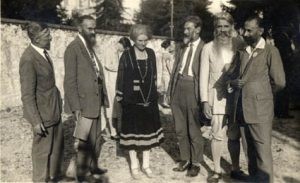
Beatrice Ensor (third left) with her leadership team at the NEF Conference in Calais, France in 1921.
1921 marked the beginning of an international educational fellowship that would endure for more than a century.
So, born in the aftermath of the First World War, the Fellowship reflected a conviction shared by educators across different countries and traditions: that lasting peace required more than diplomacy between governments. It required education capable of cultivating independence, cooperation, international understanding and a sense of shared humanity.
A Century of Milestones
From a New Educational Movement to a Worldwide Fellowship
The early decades of the Fellowship were characterised by remarkable international growth. Conferences attracted educators from different countries, national sections were established, and journals carried the movement’s ideas across linguistic and geographical boundaries.
1922
A Multilingual Publishing Network
As the Fellowship expanded internationally, a multilingual publishing network developed around its work. Alongside the London-based The New Era, Adolphe Ferrière edited Pour l’Ère Nouvelle from Geneva, while Elisabeth Rotten helped establish the German-language Das Werdende Zeitalter in Berlin. Articles and ideas circulated across these publications, connecting educators working in different languages and countries.
1920s–1930s
International Expansion
1923
Montreux, Switzerland
The Fellowship’s 1923 conference was held around the theme “Education for Creative Service” and attracted approximately 300 participants.
This was the Fellowship’s second international congress; it was held in Montreux, Switzerland, continuing the international momentum established at Calais two years earlier.
The conference reflected the growing international ambition of the new movement.
1924
The First National Section
The Fellowship began establishing national sections around the world.
Its Scottish Section, founded in 1924, became the first national section of the New Education Fellowship.
1926–1927
A Growing European Network
Expansion accelerated across Europe.
A Danish section, known as Den frie skole, was formed in 1926, followed in 1927 by sections in countries including Holland, Poland, Norway, Finland and England.
At the same time, the Fellowship’s international conferences were becoming major gatherings of educational thinkers and practitioners.
1927
Locarno: The Fellowship Becomes a Global Network
The Fourth International Congress, held at Locarno from 3–15 August 1927 under the theme “Freedom in Education”.
The gathering attracted approximately 2,400 participants, including a substantial delegation from the United States and from 42 other countries.
Locarno also marked an organisational turning point. As the Fellowship expanded rapidly, clearer arrangements were developed for affiliated national sections and publications. Significantly, the congress also recorded representation from South America, signalling the increasingly global reach of the movement.
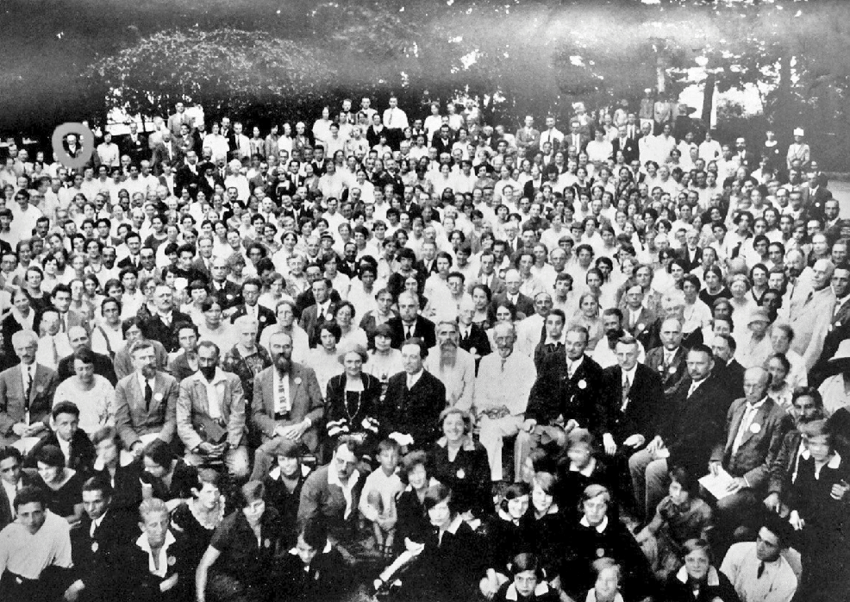
NEF Conference, Locarno, Switzerland, 1927
Brazil, Argentina at Locarno, 1927
Brazilian educator Laura Jacobina Lacombe represented the Brazilian government and the Associação Brasileira de Educação at the 1927 Locarno Congress. Her presentation introduced international delegates to developments in public education in Rio de Janeiro and included a film showing contemporary educational and school-health practices.
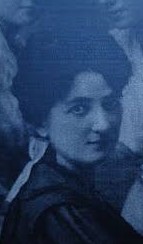
Argentine educator Clotilde Guillén de Rezzano (pictured) contributed a presentation on the autonomy of pupils in state schools, based on work at Escuela Normal No. 5 in Buenos Aires. Her paper appeared in Pour l’Ère Nouvelle.
Together, Lacombe and Rezzano allow the page to show women educators from Latin America participating in the international movement as contributors rather than peripheral observers
1930
The Fellowship Reaches India
Following engagement with the leadership of the New Education Fellowship in Europe, the poet and educator Rabindranath Tagore helped establish an NEF group at Santiniketan, West Bengal.
In 1936, the Santiniketan group organised a featured event during Calcutta University’s Education Week at the University’s Senate Hall.

Rabindranath Tagore
1932
The New Education Fellowship in America
Beatrice Ensor’s earlier engagement with educators in the United States helped stimulate American interest in the Fellowship.
By 1932, the Progressive Education Association of America had become the American Section of the New Education Fellowship.
1936
Latin American Leadership at Cheltenham
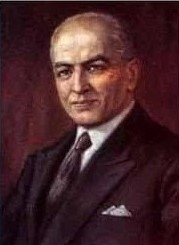
At the Fellowship’s Cheltenham Congress, Colombian educator Agustín Nieto Caballero (1889–1975), founder of Bogotá’s influential Gimnasio Moderno, appeared among the principal speakers. His prominence reflected the Fellowship’s growing network beyond Europe and the increasingly multidirectional circulation of educational ideas.
At the Fellowship’s Cheltenham Congress, Colombian educator Agustín Nieto Caballero, founder of Bogotá’s influential Gimnasio Moderno, appeared among the principal speakers. His prominence reflected the Fellowship’s growing network beyond Europe and the increasingly multidirectional circulation of educational ideas.
1937
The Fellowship in Australia
The New South Wales-based Australian Section of the New Education Fellowship was formed in 1937.
That year also saw a major Fellowship conference in New South Wales, supported by the Australian Council for Educational Research.
Australia would remain an important part of the Fellowship’s international story and later hosted the 1976 WEF International Conference at Macquarie University in Sydney.
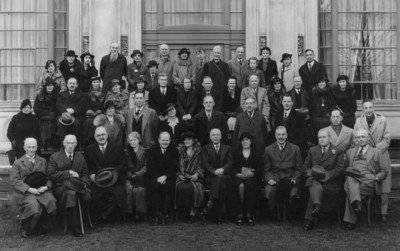
1937 Australian conference
By the End of 1937
A Truly International Movement
51
national sections and groups
23
magazines
15
languages
Within little more than fifteen years of its foundation, the New Education Fellowship had developed a remarkable international reach.
1941
The Fellowship Meets in Wartime America
With Europe engulfed by war, the Fellowship’s Eighth International Conference was held in Ann Arbor, Michigan, United States. European representation was greatly reduced while educators from Latin America participated in substantial numbers, illustrating how the Fellowship’s centre of international activity was temporarily shifting beyond Europe.
That also provides a natural historical bridge into UNESCO.
1942
The Fellowship Reaches Brazil, South America
After two decades of informal connections between Brazilian educators and the Fellowship, a Brazilian section was established in 1942, with leading educator M. B. Lourenço Filho as president. American progressive educator Carleton Washburne played an important intermediary role during an educational mission through South America.
The phrase “after two decades of informal connections” is important.
By the late 1920s, the New Education Fellowship was becoming a genuinely transcontinental educational network. Educators from South America participated in its international congresses, exchanged correspondence with Fellowship leaders and established journals and national sections connected with the movement.
Argentina established a national section in 1928, followed by Ecuador and Peru in 1930, Chile in 1931, Paraguay and Uruguay in 1932, Bolivia in 1936 and Brazil in 1942. These developments demonstrate that the Fellowship’s influence extended far beyond Europe during its formative decades.
Education, Peace & International Cooperation
The Fellowship and UNESCO
The middle decades of the twentieth century represented another important chapter in the Fellowship’s history.
The disruption of the Second World War brought considerable challenges. The bombing of the Fellowship’s London headquarters in 1940 contributed to serious financial uncertainty.
Yet the Fellowship’s commitment to international educational cooperation placed it within the wider intellectual and institutional movement that accompanied the establishment of UNESCO after the war.
1942–1945
NEF and the Emergence of UNESCO
The New Education Fellowship was closely associated with educational internationalism during the period in which the United Nations Educational, Scientific and Cultural Organization (UNESCO) was being created.
Historical scholarship has described the New Education Fellowship as a significant influence in this formative environment, including the memorable description of the Fellowship as a “midwife at the birth of UNESCO.”
UNESCO
1947
International Recognition
Following the establishment of UNESCO, the New Education Fellowship gained recognition within the emerging international institutional landscape.
The Fellowship was recognised as a non-governmental organisation in relation to the United Nations and UNESCO and later associated with United Nations peace initiatives.
1948–1964
Post-War Support and Renewal
The aftermath of the Second World War was financially difficult for the Fellowship.
Support provided through UNESCO helped the organisation continue its international activities and regain greater stability during the post-war period.
Historical papers documenting the relationship between the Fellowship and UNESCO form an important part of the WEF archival record.
1966
From the New Education Fellowship to the World Education Fellowship
After forty-five years as the New Education Fellowship, the organisation adopted the name by which it is known today:
World Education Fellowship
The change of name in 1966 reflected the Fellowship’s evolving international identity while retaining its longstanding commitment to education, cooperation and human development.
A Fellowship Evolves
1969–1987
1969
World Education Fellowship Indian Section
Nearly four decades after Rabindranath Tagore helped establish an NEF group at Santiniketan, a national World Education Fellowship organisation was established in India.
Its development was associated with the leadership of Dr Madhuri Shah, former Chairperson of the University Grants Commission, and M. T. Vyas, then Principal of the New Era School in Mumbai.
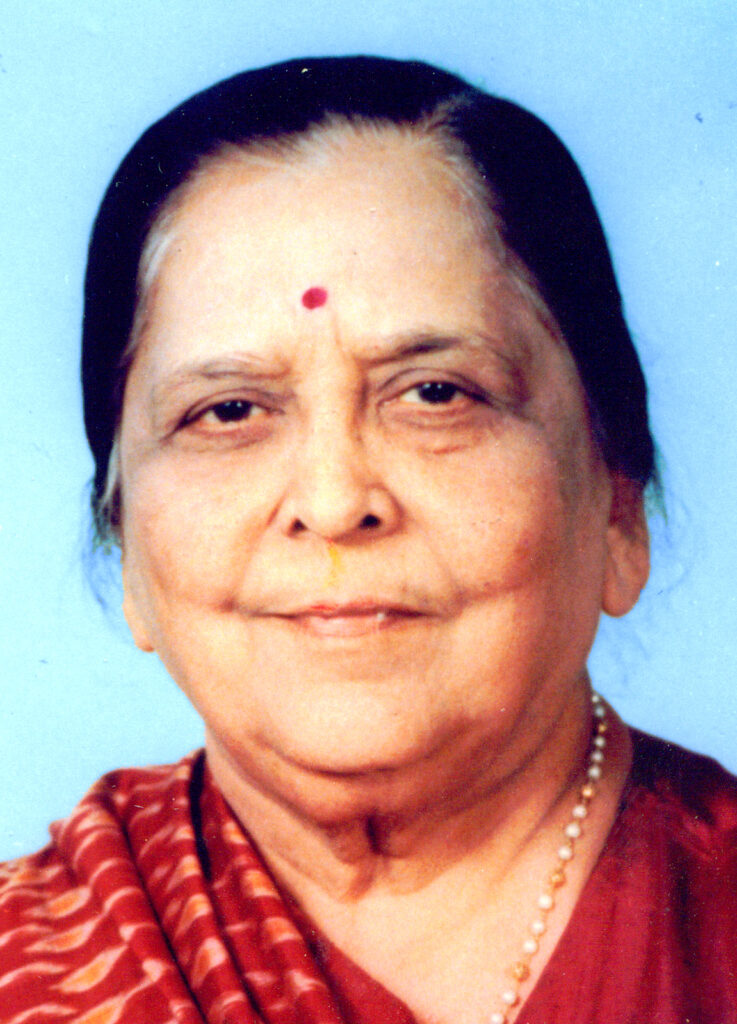
Dr Madhuri Shah
1974
End of an Era
Beatrice Ensor died in 1974 at the age of 89.
Her death marked the passing of the last of the Fellowship’s original founding generation, which included educational pioneers such as Pierre Bovet, Elizabeth Rotten, Paul Geheeb, Adolphe Ferrière, Édouard Claparède and Ovide Decroly.
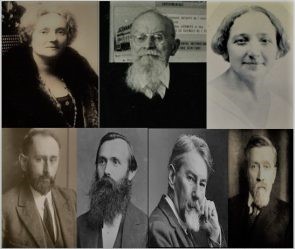
Founding leadership, L-R (Top): Beatrice Ensor (1885-1974), Pierre Bovet (1878-1965), Dr Elizabeth Rotten (1882-1964); L-R (Bottom): Paul Geheeb (1870-1961), Adolphe Ferrière (1879-1960), Dr Édouard Claparède (1873-1940), and Dr Jean-Ovide Decroly (1871-1932).
1984
The Great Britain Section
The Scottish Section, founded in 1924, and the English Section, founded in 1927, merged in 1984 to form the Great Britain Section of the World Education Fellowship.
1987
Australian Section at 60
The Australian New South Wales Section celebrated its Diamond Jubilee on 25 July 1987.
The anniversary gathering was held at Sydney Girls’ High School.
A Living Legacy
Journal, Archive & Centenary
The twenty-first century brought renewed attention to the Fellowship’s intellectual and institutional heritage.
Particular emphasis was placed on preserving its publications, celebrating its centenary and reconnecting the organisation’s historic contribution with contemporary educational debates.
2019
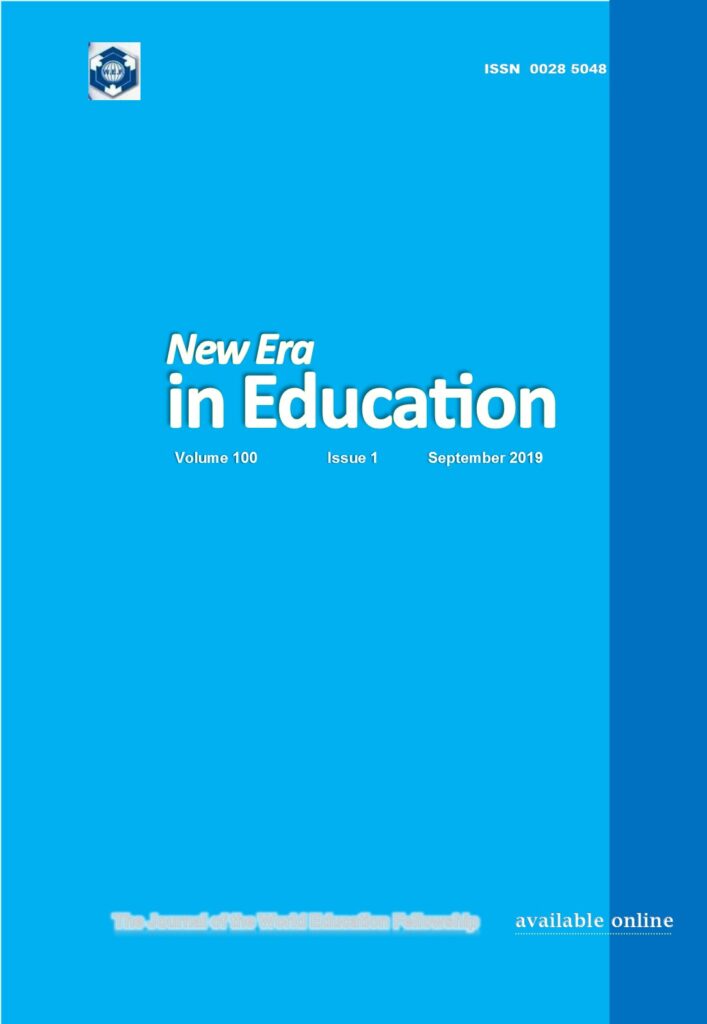
100 Volumes of New Era in Education
The 100th volume of New Era in Education was launched in September 2019 at a joint WEF–KIE Conference in Dubai, United Arab Emirates.
The occasion also saw the launch of the WEF Annual Centenary Lecture.
The first lecture was delivered by Professor David Turner in honour of the late President of the WEF Indian Section, Mrs Kallolini Hazarat.
2020
Preserving the New Era in Education Archive
With the support of University College London Library Special Collections, historic issues of New Era in Education covering the period 1920–1999 became available through a digital archive.
The collection preserves an important record of twentieth-century debates about educational reform, internationalism and progressive education.
2021
WEF at 100
A century after the first international conference in Calais, the World Education Fellowship celebrated its Centenary Anniversary.
The Fellowship’s 45th international conference, held from 11–13 September 2021, was hosted by WEF Japan.
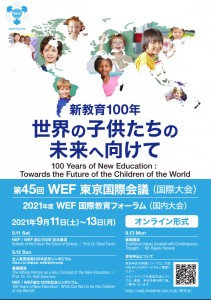
100 Years of Fellowship
45 International Conferences
Generations of Educators Across the World
2021
A Centenary Publication
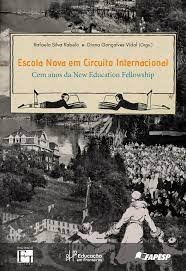
The Fellowship’s centenary was also commemorated through the publication of:
Escola Nova em Circuito Internacional: Cem anos da New Education Fellowship
Edited by Rafaela Silva Rabelo and Diana Gonçalves Vidal, the Portuguese-language volume explored the international history and influence of the New Education Fellowship.
The Fellowship’s centenary was also commemorated through the publication of:
Escola Nova em Circuito Internacional: Cem anos da New Education Fellowship
Edited by Rafaela Silva Rabelo and Diana Gonçalves Vidal, the Portuguese-language volume explored the international history and influence of the New Education Fellowship.
2022
World Education Fellowship in Botswana
The World Education Fellowship Botswana Section was launched in 2022.
Its establishment expanded the Fellowship’s presence in Africa alongside existing sections in Nigeria and South Africa.
The Botswana Section was launched under the leadership of Dr Nonofo Constance Losike-Sedimo, of the University of Botswana.
The Founding Generation
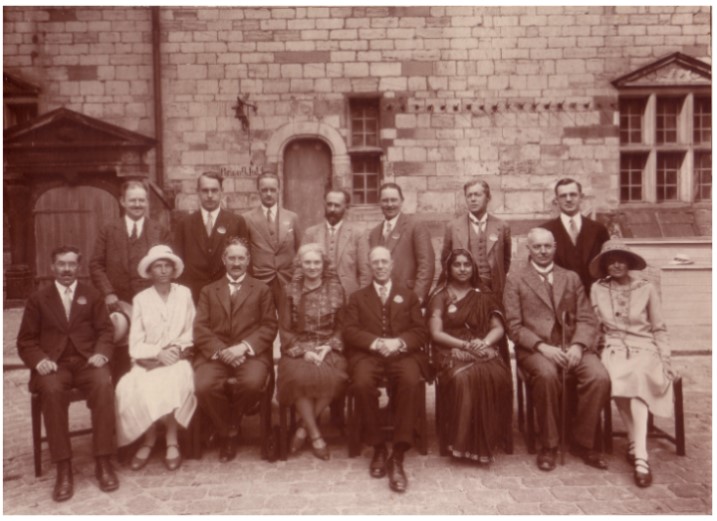
The Founding Generation (L-R): Beatrice Ensor (4th) with NEF colleagues in 1921
Educators Who Helped Shape the Fellowship
The New Education Fellowship emerged from an international community of educators, psychologists and reformers who challenged conventional ideas about schooling and sought more humane approaches to learning and human development.
Their ideas and international networks helped establish the foundations upon which the World Education Fellowship developed.
Beatrice Ensor
Founding President
English educationist and HM Schools Inspector
Beatrice Ensor was the principal driving force behind the creation and early development of the New Education Fellowship.
Her work connected educational reform, publishing and international networking and helped transform a relatively small group of educators into a worldwide fellowship.
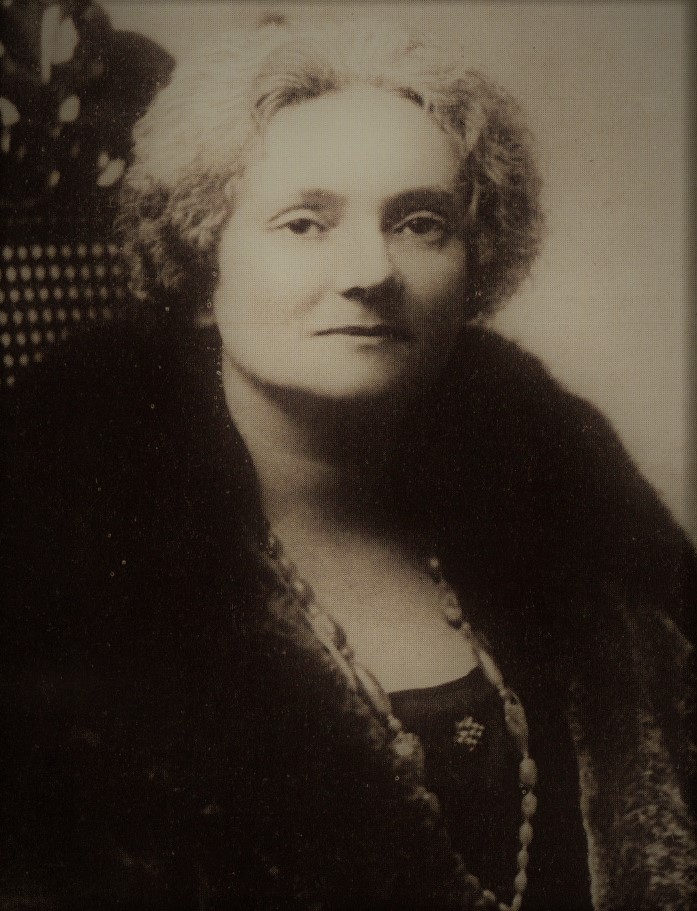
Beatrice Ensor
Adolphe Ferrière
Founding Vice President
Swiss educator
Ferrière was an influential figure in progressive and new education and served as one of the founding Vice Presidents of the New Education Fellowship.
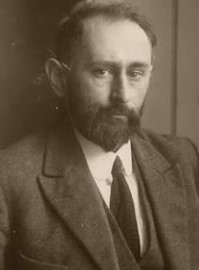
Adolphe Ferrière
Elizabeth Rotten
Founding Vice President
German educator and internationalist
Rotten was a founding Vice President of the Fellowship and played an important role in its German-speaking network.
She was also associated with Das Werdende Zeitalter, the German-language counterpart of the Fellowship’s educational journal.
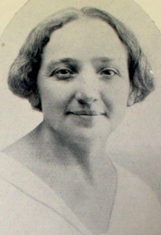
Elizabeth Rotten
The Early Leadership & Intellectual Circle
Ovide Decroly
Belgian teacher and psychologist
Decroly was an influential educational thinker and a member of the intellectual and leadership circle associated with the early Fellowship.
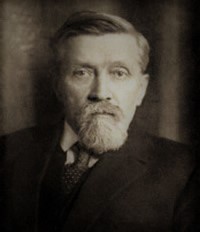
Ovide Decroly
Édouard Claparède
Swiss neurologist, child psychologist and educational thinker
Claparède was an important figure in progressive approaches to education and child development and formed part of the Fellowship’s founding generation.
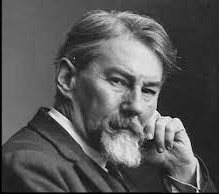
Édouard Claparède
Paul Geheeb
German pedagogue and pioneer of progressive schooling
Geheeb was among the educators associated with the early international movement from which the New Education Fellowship emerged.
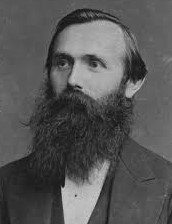
Paul Geheeb
A Global Movement by Design
From its earliest years, the Fellowship organised its international outreach across linguistic and cultural regions. Beatrice Ensor became particularly associated with the English-speaking world, Adolphe Ferrière with French-speaking countries and Latin America, and Elisabeth Rotten with German-speaking Europe. Through their overlapping networks, the Fellowship developed simultaneously across different educational cultures.
Explore the WEF Archive
One Fellowship, Several Names
During its international expansion, the Fellowship became known by different names across linguistic communities. In the English-speaking world it was generally the New Education Fellowship (NEF); in French-speaking and many Latin contexts it was known as the Ligue Internationale pour l’Éducation Nouvelle (LIEN). These names referred to the same international educational movement.
Discover More Than a Century of Educational History
The history of the World Education Fellowship is preserved not only through its organisational milestones but also through journals, conference programmes, photographs, books, correspondence and research.
Explore the collections that document more than a century of international educational thought and collaboration.
New Era in Education
Explore historic and contemporary issues of the Fellowship’s longstanding journal.
Historic Conferences
Discover programmes, photographs and records from international NEF and WEF conferences.
WEF & UNESCO
Explore historical resources concerning the Fellowship’s engagement with UNESCO and international educational cooperation.
Centenary Collection
Discover lectures, publications, photographs and other resources commemorating 100 years of the World Education Fellowship.
More Than History
A Century Behind Us. A Future Still to Shape.
The history of the World Education Fellowship is ultimately a history of people: educators willing to exchange ideas across borders, challenge established assumptions and imagine better possibilities for education.
From Calais in 1921 to the Fellowship’s centenary and beyond, that commitment to dialogue, international understanding and human-centred education has remained at the heart of the WEF story.
Explore the Fellowship today.