
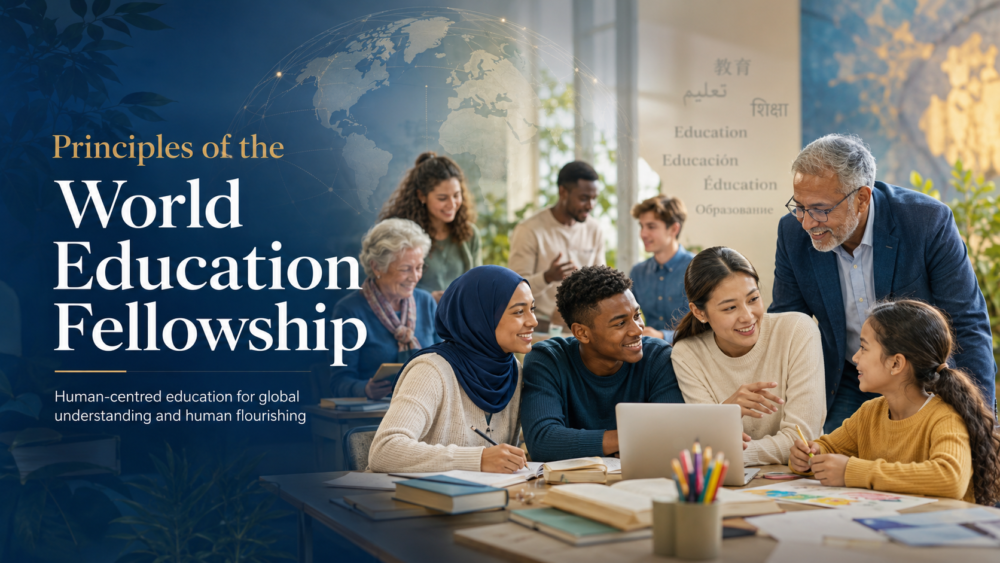
Principles of the World Education Fellowship
For more than a century, the World Education Fellowship (WEF) has championed education as a transformative force for personal growth, democratic participation, international understanding, and human flourishing.
At the heart of the Fellowship is the belief that education should help every individual develop as a confident, compassionate, creative, informed, and socially responsible member of both local and global communities.
The WEF affirms the following principles:
Human-Centred Education
Education should nurture the intellectual, emotional, creative, ethical, and social development of every learner, recognising the dignity and potential of each individual.
Learning Through Community
People thrive in environments built on mutual respect, cooperation, shared purpose, and social responsibility. Schools and learning institutions should aspire to become supportive communities that cultivate belonging, dialogue, and collaboration.
Learner Agency and Responsibility
Learners should gradually be encouraged to take increasing responsibility for their own education, supported by teachers, families, and communities. Education should empower individuals to engage meaningfully with both local realities and global challenges.
Creativity, Motivation, and Achievement
High levels of achievement are best realised when education inspires curiosity, creativity, intrinsic motivation, and open access to diverse learning opportunities.
Inclusive and Affirming Assessment
Assessment should not merely measure performance, but also support growth, recognise achievement, strengthen confidence, and promote self-esteem.
Education for Global Citizenship
Education should encourage international understanding, intercultural dialogue, peace, democratic values, and respect for humanity’s shared future.
Activities and Commitments of the World Education Fellowship
The WEF advances its mission through international collaboration, conferences, publications, dialogue, advocacy, and educational initiatives across diverse cultural and national contexts.
The Fellowship is committed to:
- Promoting educational policies and practices that respond to the diverse and evolving needs of learners of all ages.
- Supporting greater social justice, equality, and human development through access to high-quality education worldwide.
- Encouraging an educational balance between personal growth and social responsibility, recognising the importance of both individual fulfilment and collective wellbeing.
- Fostering international educational cooperation and intercultural exchange in order to strengthen peace, understanding, and global solidarity.
- Promoting lifelong learning as a universal human opportunity, regardless of gender, race, culture, beliefs, economic background, or ability.
- Encouraging collaborative community participation in shaping educational goals and supporting meaningful educational programmes.
- Advocating for teachers by supporting the professional training, resources, recognition, and opportunities necessary for effective educational practice and leadership.